How to Build a Bond Ladder: A Strategy for Steady Income
You have Rs. 10 lakhs to invest in bonds. Should you put it all in a single 5-year NCD at 9%? Or spread it across different maturities? If you've ever worried about locking your money away for too long—or missing out on rising interest rates—bond laddering is the strategy you need.
What Is a Bond Ladder?
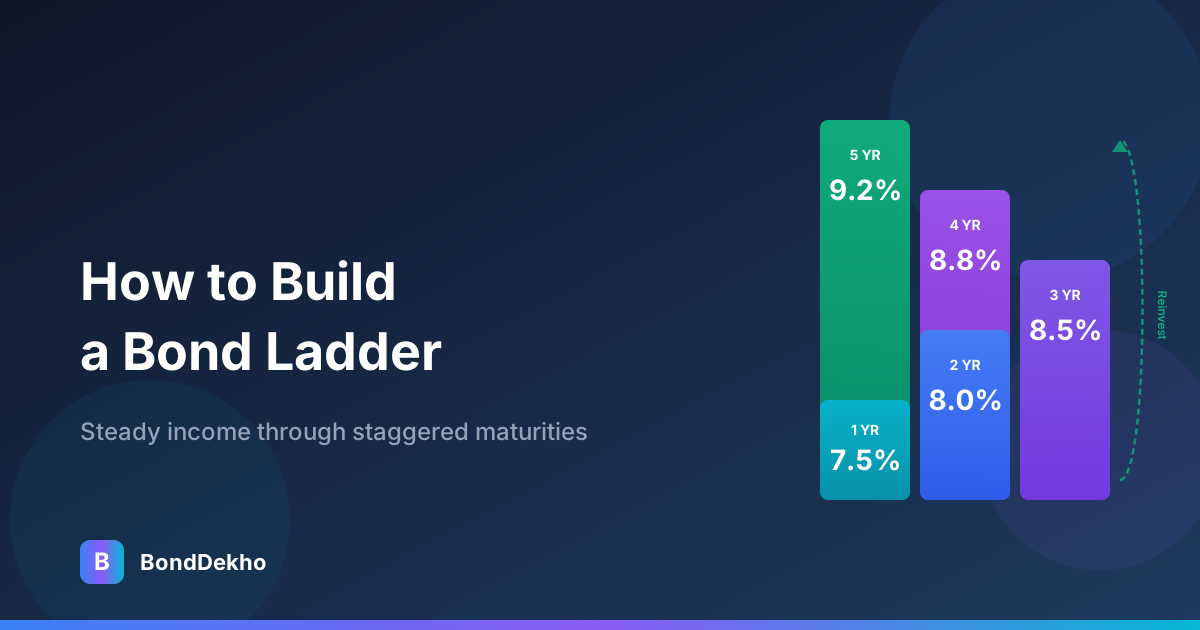
A bond ladder is a portfolio of bonds with staggered maturity dates. Instead of concentrating your investment in one bond, you spread it across multiple bonds maturing at regular intervals—like rungs on a ladder.
Simple Example
With Rs. 10 lakhs:
| Rung | Amount | Maturity | Yield |
|---|---|---|---|
| 1 | Rs. 2,00,000 | 1 year | 7.5% |
| 2 | Rs. 2,00,000 | 2 years | 8.0% |
| 3 | Rs. 2,00,000 | 3 years | 8.5% |
| 4 | Rs. 2,00,000 | 4 years | 8.8% |
| 5 | Rs. 2,00,000 | 5 years | 9.2% |
When Rung 1 matures after one year, you reinvest that Rs. 2 lakhs into a new 5-year bond—maintaining the ladder structure.
Why Does Bond Laddering Work?
1. Reduces Interest Rate Risk
The biggest fear for bond investors: you lock in at 8%, and rates rise to 10% next year. With a ladder:
- Bonds maturing soon get reinvested at the new higher rate
- You're never fully locked into one rate environment
- Over time, your portfolio naturally adjusts to market rates
2. Provides Regular Cash Flow
Each rung maturing provides a predictable cash inflow. Combined with coupon payments, you get money coming in at regular intervals—ideal for retirees or anyone needing periodic income.
3. Balances Yield and Liquidity
Longer bonds pay more but lock your money longer. A ladder gives you:
- The higher yields of long-term bonds (in later rungs)
- The accessibility of short-term bonds (in earlier rungs)
- The average: A blended yield better than parking everything in short-term instruments
4. Eliminates Timing Pressure
No need to predict whether rates will rise or fall. The ladder automatically adapts:
- Rates rise? Your maturing bonds get reinvested at higher yields
- Rates fall? Your existing longer-term bonds are already locked at the older, higher rate
How to Build Your First Bond Ladder: Step by Step
Step 1: Define Your Investment Amount and Goals
Before picking bonds, answer these questions:
| Question | Example Answer |
|---|---|
| Total amount to invest? | Rs. 10,00,000 |
| Primary goal? | Regular income + capital safety |
| Minimum credit rating? | AA or above |
| Need for liquidity? | Moderate (can lock for up to 5 years) |
| Tax bracket? | 30% |
Step 2: Choose Your Ladder Structure
The structure depends on your time horizon and income needs:
Short Ladder (1-3 years) — Best for conservative investors
Rung 1: 6-month maturity
Rung 2: 1-year maturity
Rung 3: 2-year maturity
Rung 4: 3-year maturity
Medium Ladder (1-5 years) — Most popular, good balance
Rung 1: 1-year maturity
Rung 2: 2-year maturity
Rung 3: 3-year maturity
Rung 4: 4-year maturity
Rung 5: 5-year maturity
Long Ladder (2-10 years) — For maximum yield
Rung 1: 2-year maturity
Rung 2: 4-year maturity
Rung 3: 6-year maturity
Rung 4: 8-year maturity
Rung 5: 10-year maturity
Step 3: Select Bonds for Each Rung
For each maturity slot, pick bonds based on:
- Credit quality: Stick to AA or above for safety — see our credit ratings guide for what each grade means
- Yield: Compare across platforms for the best rate at that maturity
- Coupon frequency: Match to your income needs (quarterly/annual)
- Lot size: Ensure minimum investment fits your per-rung allocation
Step 4: Execute and Track
Once you've selected bonds:
- Buy across platforms if one platform doesn't have the best rate for all maturities
- Set reminders for maturity dates
- Plan reinvestment 2-4 weeks before each maturity
Real-World Bond Ladder Example for India
Let's construct a practical 5-rung ladder with Rs. 15 lakhs:
Portfolio Construction
| Rung | Allocation | Maturity | Bond Type | Rating | Yield | Annual Income |
|---|---|---|---|---|---|---|
| 1 | Rs. 3,00,000 | Mar 2027 | PSU NCD | AAA | 7.8% | Rs. 23,400 |
| 2 | Rs. 3,00,000 | Feb 2028 | NBFC NCD | AA+ | 8.3% | Rs. 24,900 |
| 3 | Rs. 3,00,000 | Jan 2029 | Corporate Bond | AA | 8.7% | Rs. 26,100 |
| 4 | Rs. 3,00,000 | Dec 2029 | Infra NCD | AA | 9.0% | Rs. 27,000 |
| 5 | Rs. 3,00,000 | Nov 2030 | NBFC NCD | AA+ | 9.3% | Rs. 27,900 |
| Total | Rs. 15,00,000 | Avg: 8.62% | Rs. 1,29,300 |
Cash Flow Timeline
Year 1: Coupons from all 5 bonds = Rs. 1,29,300
         + Rung 1 matures = Rs. 3,00,000 → Reinvest in new 5-year bond

Year 2: Coupons from 4 bonds + new bond ≈ Rs. 1,28,000
         + Rung 2 matures = Rs. 3,00,000 → Reinvest in new 5-year bond

[Pattern continues each year]
By Year 5, every rung in your ladder is a 5-year bond purchased at different times, giving you the higher yields of long-term bonds with annual liquidity events.
What Happens When Rates Change?
Scenario 1: Rates Rise by 1%
| Year | Maturing Rung | Old Yield | Reinvestment Yield | Impact |
|---|---|---|---|---|
| 1 | Rung 1 | 7.8% | 8.8% | +1.0% on Rs. 3L |
| 2 | Rung 2 | 8.3% | 9.3% | +1.0% on Rs. 3L |
| 3 | Rung 3 | 8.7% | 9.7% | +1.0% on Rs. 3L |
Your portfolio yield gradually rises. After 5 years, the entire ladder reflects the new higher rates.
Compare this to putting all Rs. 15L in a single 5-year bond at 9%—you'd be stuck at the old rate for the full term.
Scenario 2: Rates Fall by 1%
Your existing bonds are earning above-market rates. The ladder acts as a buffer:
- Only 20% of your portfolio reinvests at the lower rate each year
- 80% continues at the old, higher rates
- Full impact takes 5 years to materialize
How Does a Bond Ladder Compare to Other Strategies?
Bond Ladder vs Bullet Strategy
A "bullet" concentrates all bonds at one maturity date.
| Factor | Ladder | Bullet |
|---|---|---|
| Interest rate risk | Low (spread across maturities) | High (all at one rate) |
| Reinvestment flexibility | Annual | All at once |
| Yield | Blended (moderate) | Potentially higher if timing is right |
| Cash flow | Regular | Lumpy |
| Best for | Income seekers, risk-averse | Rate view traders |
Bond Ladder vs Bond Funds
| Factor | Bond Ladder | Bond Mutual Fund |
|---|---|---|
| Control | Full (you pick each bond) | None (fund manager decides) |
| Maturity certainty | Yes (known dates) | No (rolling portfolio) |
| Credit quality control | Yes | Limited |
| Costs | Zero (after purchase) | 0.5-1.5% expense ratio annually |
| Tax efficiency | Can plan around holding periods | Fund redemption rules apply |
| Liquidity | At each rung maturity | Anytime (but with NAV risk) |
When a Ladder Beats Funds
- You want predictable maturity dates for goals (education, retirement milestones)
- You don't want expense ratios eating your returns
- You prefer knowing exactly which issuers you hold
- You want to control credit quality precisely
When Funds Beat a Ladder
- Investment amount is too small to diversify (under Rs. 2 lakhs)
- You want professional credit analysis
- You need daily liquidity
- You don't want to manage reinvestments
Common Mistakes to Avoid
1. Ignoring Credit Quality for Yield
Don't stretch to BBB-rated bonds just to get a higher yield in one rung. One default can wipe out years of extra coupon income. Prefer secured bonds for better recovery in worst-case scenarios.
Rule of thumb: Keep 70%+ of your ladder in AA or above.
2. Uneven Rung Spacing
If all your bonds mature within 6 months of each other, you don't really have a ladder. Ensure at least 6-12 month gaps between maturity dates.
3. Forgetting to Reinvest
The ladder only works if you reinvest maturing rungs. Set calendar reminders and start comparing rates 2-4 weeks before maturity.
4. Ignoring Callable Bonds
Some bonds have call options allowing the issuer to redeem early. If your 5-year rung gets called in Year 3, your ladder has a gap. Check call provisions before buying.
5. Concentrating in One Sector
A ladder of 5 NBFC bonds isn't truly diversified. Spread across sectors:
- PSU/Government
- NBFCs
- Infrastructure
- Manufacturing
- Banking
How Are Bond Ladder Returns Taxed?
Listed vs Unlisted Bonds
| Aspect | Listed Bonds (>12 months) | Unlisted Bonds |
|---|---|---|
| Interest | Taxed at slab rate | Taxed at slab rate |
| Capital Gains | 12.5% LTCG | At slab rate |
| TDS | 10% on interest >Rs. 5,000 | 10% on interest >Rs. 5,000 |
Tax-Efficient Ladder Tips
- Prefer listed bonds for rungs you plan to sell before maturity
- Use cumulative option for high tax brackets—defer tax to maturity
- Stagger across financial years to spread tax liability (see our full tax planning guide)
- Track cost basis carefully for bonds bought at premium/discount
How Much Should You Allocate to a Bond Ladder?
This depends on your overall asset allocation:
| Investor Profile | Age Group | Bond Ladder Allocation |
|---|---|---|
| Aggressive | 25-35 | 10-20% of portfolio |
| Balanced | 35-50 | 25-40% of portfolio |
| Conservative | 50-60 | 40-60% of portfolio |
| Retiree | 60+ | 50-70% of portfolio |
The bond ladder should be the stable, income-generating core of your fixed-income allocation.
Key Takeaways
-
A bond ladder staggers maturities to balance yield, liquidity, and interest rate risk
-
Start with 5 rungs spaced 1 year apart for a simple, effective structure
-
Always reinvest maturing rungs into new long-term bonds to maintain the ladder
-
Diversify across sectors and issuers—don't build a ladder of only NBFC bonds
-
Laddering beats timing: You don't need to predict interest rates when your portfolio automatically adapts
-
Minimum Rs. 5-10 lakhs recommended for a meaningful 5-rung ladder with diversification
-
Use BondDekho to compare yields across platforms for each rung—even small yield differences compound significantly over a ladder's lifetime
Conclusion
Bond laddering isn't glamorous, but it's one of the most reliable fixed-income strategies available. It eliminates the two biggest risks in bond investing—locking in at the wrong rate and running out of liquidity—while delivering predictable income year after year.
Whether you're building retirement income or simply want better returns than an FD without the uncertainty of bond funds, a well-constructed ladder is worth considering.
Try our Bond Ladder Planner to build your own ladder. Compare bonds across platforms on BondDekho to find the best rates for each rung.
Disclaimer: This article is for educational purposes only and should not be considered investment advice. Bond investments carry credit, interest rate, and liquidity risks. Please consult a SEBI-registered investment adviser before making any investment decisions. Data presented may not reflect current market conditions — verify all information independently.